

Why is HDPE Double Wall Corrugated Pipe widely preferred in modern municipal drainage projects?
HDPE double wall corrugated pipes have become the mainstream structured plastic pipe for upgrading existing urban sewage networks, community drainage, and road drainage projects. As infrastructure constructors and contractors gradually realized that traditional concrete and cast iron drainage pipes have problems such as heavy weight, easy leakage, and poor corrosion resistance, HDPE double-wall corrugated pipes, with their corrosion resistance, light weight, high rigidity, and comprehensive cost advantages, have stood out and are widely used in various building and residential drainage-related projects.
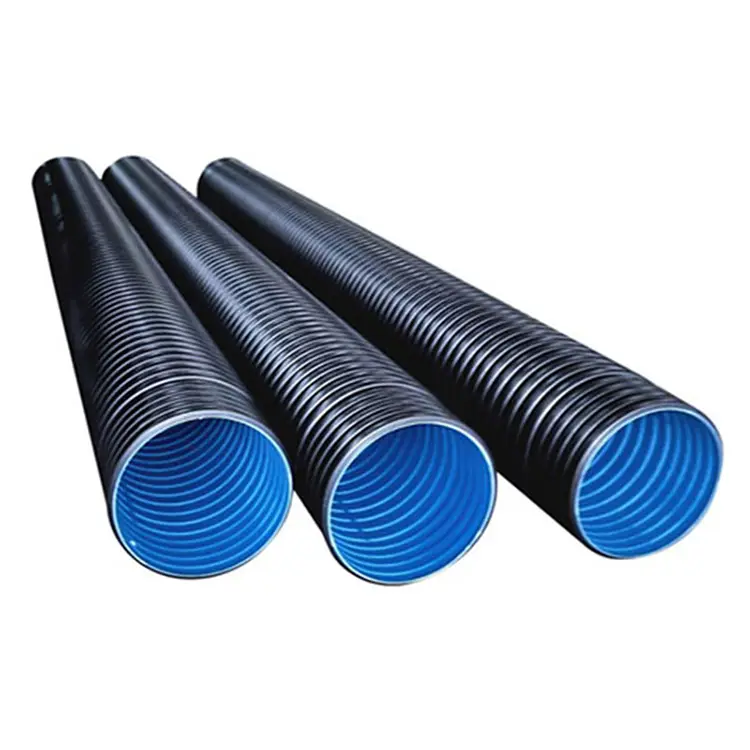
HDPE double wall corrugated pipes can simplify the construction process at the construction site and significantly reduce the overall investment cost of the drainage project. Due to the light weight of the pipes, they do not require large lifting equipment during transportation and laying. The clamp-type rubber ring connection method simplifies the installation steps, making the construction progress much faster than that of concrete pipes and steel pipes, effectively shortening the entire project cycle and reducing labor costs.
HDPE double-wall corrugated pipes have both high ring stiffness and flexibility, which can adapt to complex underground geological environments. Their double-wall structure design gives the pipes strong resistance to soil layer overloading. Unlike rigid pipes, HDPE double-wall corrugated pipes will not crack even under slight foundation settlement, significantly reducing the maintenance risks of the buried drainage network in the later stage due to pipe rupture.
HDPE double wall corrugated pipes have excellent anti-corrosion performance and a long service life. They will not be corroded by acidic and alkaline soil, domestic sewage, and general industrial wastewater, completely avoiding the corrosion failure problem of metal pipes. Under correct installation conditions, HDPE double-wall corrugated pipes can maintain stable performance for over 50 years, minimizing the costs of frequent maintenance and replacement, and are suitable for underground sewage and rainwater transportation systems.
HDPE double wall corrugated pipes conform to the current green construction trend in urban and rural infrastructure construction. This pipe material is made of recyclable high-density polyethylene raw materials and will not cause secondary pollution to the soil and groundwater during operation. Compared with the production process of concrete pipes, it consumes less resources and is more in line with the low-carbon requirements of modern municipal engineering procurement.
With the annual progress of sponge city construction and rural sewage treatment projects, the market demand for HDPE double wall corrugated pipes continues to grow. In addition to the reconstruction of municipal sewage pipelines, it has also expanded its application in highway subgrade drainage, farmland drainage and flood control, park landscape leakage systems, and cable protection sleeves, etc.
Looking forward to the future development of infrastructure, by continuously optimizing the formula and molding process, the overall performance of HDPE double-wall corrugated pipe will be further improved. In rainwater and sewage diversion renovations, residential supporting drainage, road-related drainage projects, HDPE double-wall corrugated pipes provide a reliable, economical and environmentally friendly pipeline solution, helping to build high-quality drainage infrastructure in urban and rural areas. It will gradually replace traditional rigid drainage pipe materials in more engineering scenarios.