

How Does HDPE Pipe Deliver Long-Term Performance, Efficiency, and Future-Ready Reliability?
High-Density Polyethylene (HDPE) pipe has become one of the most relied-upon piping solutions across municipal water systems, industrial fluid transport, agricultural irrigation, mining operations, and gas distribution. Its growing global adoption is driven by durability, corrosion resistance, leak-proof performance, and long lifecycle economics. As infrastructure requirements strengthen worldwide, HDPE pipe continues to answer critical challenges: how to reduce maintenance costs, how to prevent leakage, how to withstand environmental stress, and how to ensure sustainable pipeline operations over decades.
How Do HDPE Pipe Properties Enhance Structural Strength, Performance, and Longevity?
HDPE pipe’s performance is rooted in the molecular characteristics of high-density polyethylene. Its long polymer chains create unmatched stress resistance and flexibility. These material behaviors naturally raise deeper questions relevant to engineers and buyers: How does the pipe maintain pressure? How does it resist cracking? How does it reduce leakage?
To answer these, each engineering benefit can be explored logically:
How does HDPE pipe reduce leakage risk?
HDPE pipe is joined using heat-fusion techniques, creating a monolithic system where joints become as strong as the pipe walls. Without mechanical joints, the risk of leakage decreases significantly, which is especially critical for gas lines, municipal water supply, and chemical transport applications.
How does HDPE pipe withstand soil movement and stress?
Its exceptional flexibility allows it to absorb ground shifts, vibration, and installation-related impact. Compared with rigid materials such as steel or concrete, HDPE pipe resists cracking even under dynamic environmental conditions.
How does HDPE pipe maintain structural performance under long-term load?
The pipe’s high Slow Crack Growth (SCG) resistance and optimized wall thickness ensure stable performance in pressurized systems. It remains structurally sound over a service life often exceeding 50 years.
HDPE Pipe Technical Parameters (Representative Specifications)
| Specification Category | Details |
|---|---|
| Material | High-Density Polyethylene (PE80 / PE100 / PE4710) |
| Diameter Range | 20mm – 1600mm (customizable for large-diameter systems) |
| Pressure Rating | PN6, PN8, PN10, PN12.5, PN16, PN20, PN25 |
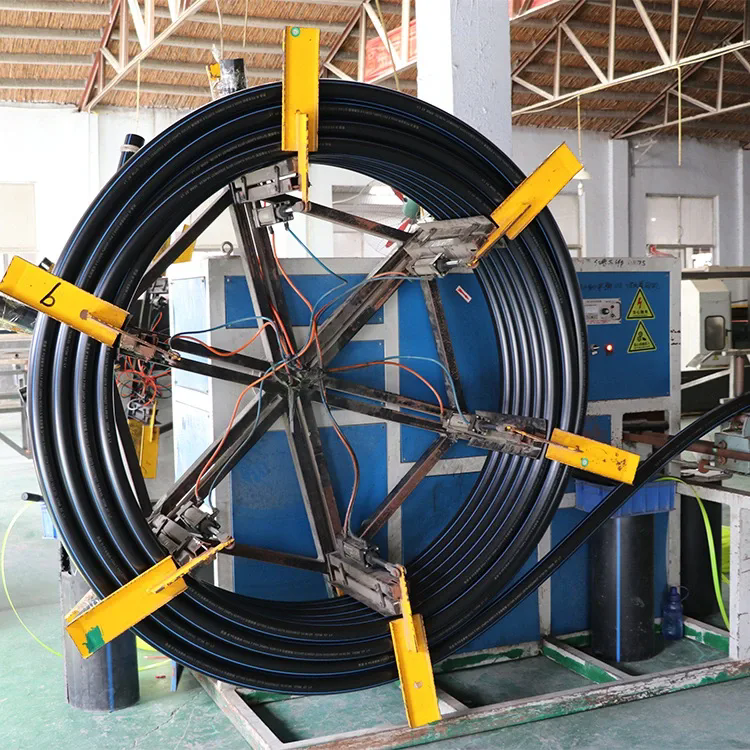
| Standard Length | 6m, 12m, or continuous coils for smaller diameters |
| Joint Method | Butt fusion, electrofusion, socket fusion |
| Temperature Resistance | -40°C to +60°C continuous operation |
| Chemical Resistance | Resistant to acids, alkalis, solvents, salinity, and corrosion |
| Applications | Water supply, gas distribution, irrigation, mining slurry, drainage, industrial fluids |
These parameters demonstrate why engineers choose HDPE pipe for demanding, long-term projects.
How Do HDPE Pipe Advantages Improve Practical Applications Across Industries?
The value of HDPE pipe is best understood through real-world advantages that transform operations. Each performance benefit answers a practical question faced by project owners and engineers.
How does HDPE pipe benefit water supply and municipal projects?
HDPE pipe’s corrosion-free nature ensures safe and clean water transport without the risk of rust particles entering the supply. Its fusion-jointed system significantly lowers Non-Revenue Water (NRW) loss, addressing a key concern for municipal utilities.
How does HDPE pipe improve agricultural irrigation efficiency?
Its light weight, flexibility, and resistance to chemicals enable efficient large-scale irrigation networks, reducing installation labor and long-term replacement costs.
How does HDPE pipe support industrial and mining applications?
Industrial facilities benefit from the pipe’s chemical resistance, while mining operations rely on its abrasion resistance when transporting slurry, tailings, and abrasive materials.
How does HDPE pipe enhance gas distribution safety?
The pipe’s strength, pressure rating reliability, and leak-free joint system align with gas industry safety requirements.
HDPE Pipe Key Advantages
-
Corrosion-Free Performance – No internal or external corrosion, ensuring water purity and structural safety.
-
High Flexibility – Allows installation in uneven terrain, minimizing breakage.
-
Impact and Stress Resistance – Suitable for areas with ground movement or vibration.
-
Lightweight Structure – Simplifies transport and installation, reducing labor costs.
-
Long Service Life – Typically 50+ years under normal operating conditions.
-
Low Maintenance Costs – Fusion joints, durability, and material stability minimize upkeep.
-
Eco-Friendly – Recyclable material supporting sustainable infrastructure development.
These advantages directly answer the global demand for durable, cost-effective, and efficient piping solutions.
How Are Future Market Trends Shaping the Demand for HDPE Pipe?
The pipeline industry is rapidly shifting due to environmental policies, urbanization, and infrastructure upgrades. HDPE pipe is positioned to meet these evolving needs. Several key future trends highlight why:
How will HDPE pipe support global infrastructure expansion?
Growing investments in water supply, gas distribution, and drainage systems make HDPE pipe the preferred material due to its longevity and low life-cycle costs.
How will sustainability trends influence HDPE pipe adoption?
Governments and industries are moving toward recyclable materials and low-maintenance systems. HDPE pipe’s recyclability and reduced energy consumption during manufacturing align with these goals.
How does HDPE pipe meet future smart-city requirements?
Smart cities require leak-proof, durable pipeline networks with minimal maintenance interruptions. HDPE pipe fulfills these specifications through its structural reliability and fusion-jointed system.
How will new material innovations enhance HDPE pipe performance?
Material enhancements such as PE4710 are increasing pressure ratings and improving crack resistance, creating safer and more robust pipelines for next-generation infrastructure.
Frequently Asked Questions (FAQ)
Q1: How long can an HDPE pipe last in standard water supply applications?
A well-manufactured HDPE pipe typically delivers a service life of 50 years or more, depending on pressure load, soil conditions, and installation quality. Its resistance to corrosion and chemical attack significantly extends operational stability compared to traditional metal piping.
Q2: How is HDPE pipe installed and joined to ensure leak-proof performance?
HDPE pipe is commonly installed using butt fusion or electrofusion. These methods heat and fuse pipe ends into a single continuous structure, making the joint as strong as the pipe itself. This eliminates weak points, ensuring leak-free and long-term performance.
How Does HDPE Pipe Strengthen Long-Term Infrastructure While Enabling Future Growth?
HDPE pipe has become a foundational material in global piping projects due to its strength, durability, leak-free performance, and adaptability across demanding environments. Its technical parameters, engineering advantages, and environmentally aligned properties position it as a future-ready solution for water, gas, industrial, and agricultural systems. As industries look for stable and sustainable pipelines that minimize replacement cycles, HDPE pipe offers a well-structured answer supported by decades of proven results.
East Boom provides HDPE pipe engineered to meet stringent quality standards while supporting long-term project requirements across multiple industries. For customized specifications, project consultation, or bulk supply planning, contact us to explore how high-performance HDPE solutions can support your infrastructure needs.